[Research] A visual deep dive into Uber’s machine learning solution for predicting ETAs. : r/MachineLearning
“Here’s one completion from the model (description to find is the first text)
“Inner Workings of Transformer Language Models This new paper presents a technical introduction to current techniques used to interpret the inner workings of Transformer-based language models. It also provides a detailed overview of the internal mechanisms implemented in these
StarCoder2-Instruct: Fully Transparent and Permissive Self-Alignment for Code Generation
“Heads up to Accelerate/FSDP users – most likely you’d want to update to `main@accelerate` which has just merged a PR
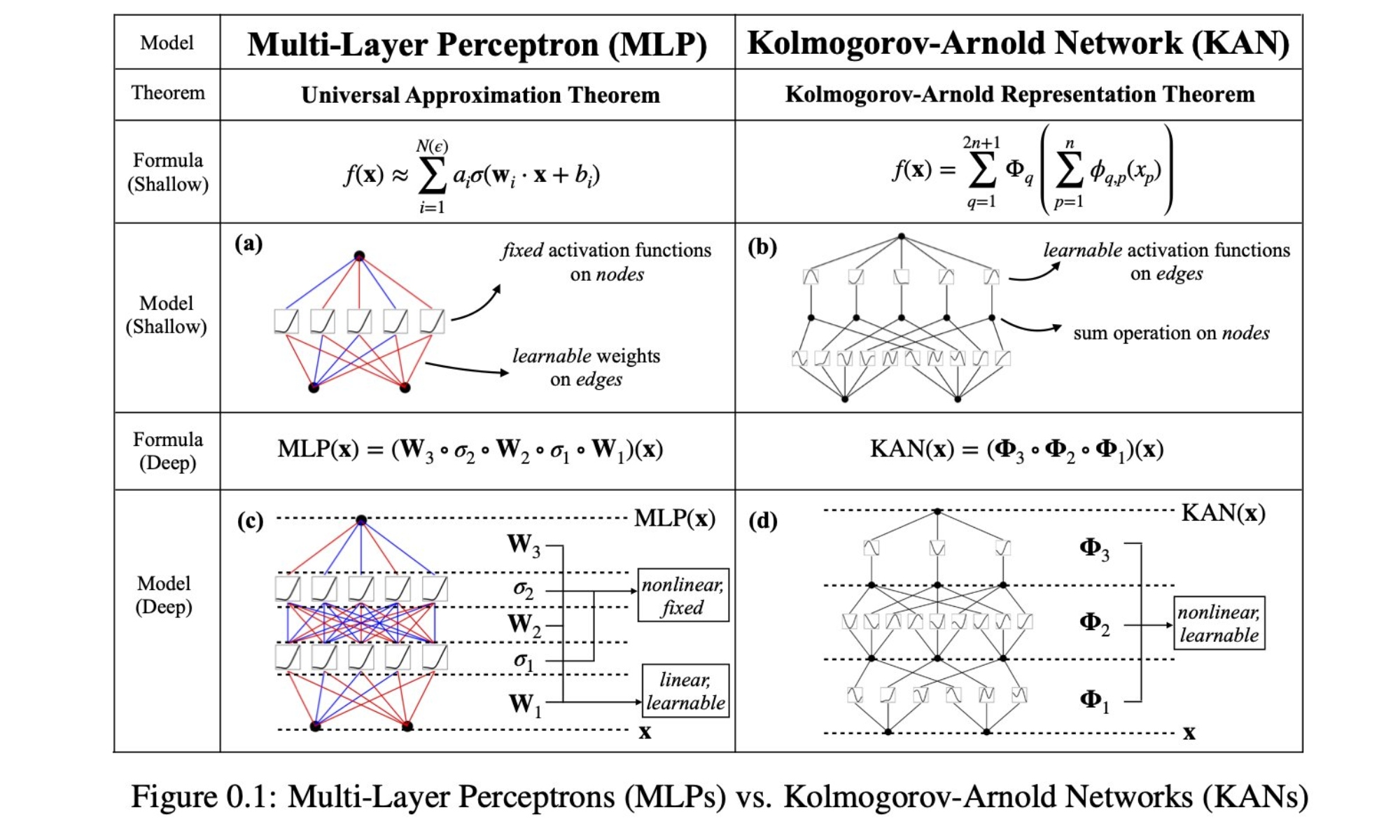
“KAN: Kolmogorov-Arnold Networks
Lightplane: Highly-Scalable Components for Neural 3D Fields
Magic machines
“one of the most important things I know about deep learning I learned from this paper: “Pretraining Without Attention” this what I found so surprising: these people developed an architecture very different from Transformers called BiGS, spent months and months optimizing it and
“Exciting news — we’re thrilled to announce that LMSYS + @kaggle are launching a human preference prediction competition with $100,000 in prizes! Your challenge is to predict which responses users will prefer in head-to-head battles between LLMs in the Chatbot Arena real-world
“Thanks for the incredible enthusiasm from our community! We really didn’t see this coming. Just a couple of things to clear up: – In line with our policy, we’ve worked with several model developers in the past to offer community access to unreleased models/checkpoints (e.g.,” / X
⭐️ Implementing FrugalGPT: Reducing LLM Costs & Improving Performance
“wake up new neural network just dropped (holy sh*t)
[2404.19756] KAN: Kolmogorov-Arnold Networks – https://arxiv.org/abs/2404.19756
“This may end up being a big deal: Usually LLMs just predict the next token in a sequence, one at a time, but if you have them predict the next several tokens at once you get significantly better performance, faster, and with no added costs. The gains are better for bigger models
Generative AI Tools | GPT4| SDXL | Qolaba AI Studio
“We just released Jamba-Instruct! Built from our groundbreaking SSM-Transformer Jamba architecture, Jamba-Instruct brings the same technological innovation to the enterprise via an aligned model. With leading quality benchmarks, a 256K context window, and the most competitive
A large Shangtang multi-modal model with 600 billion parameters was released, and the performance surpassed GPT-4 Turbo
A transformer walk-through, with Gemma – Graphcore Research Blog
“LoRA Land 310 Fine-tuned LLMs that Rival GPT-4 Low Rank Adaptation (LoRA) has emerged as one of the most widely adopted methods for Parameter Efficient Fine-Tuning (PEFT) of Large Language Models (LLMs). LoRA reduces the number of trainable parameters and memory usage while
“NeMo-Aligner Scalable Toolkit for Efficient Model Alignment Aligning Large Language Models (LLMs) with human values and preferences is essential for making them helpful and safe. However, building efficient tools to perform alignment can be challenging, especially for the
ASAM (CVPR2024): Boosting Segment Anything Model with Adversarial Tuning
“Day 24 of llm.c: we now do multi-GPU training, in bfloat16, with flash attention, directly in ~3000 lines of C/CUDA, and it is FAST! 🚀 We’re running ~7% faster than PyTorch nightly, with no asterisks, i.e. this baseline includes all modern & standard bells-and-whistles: mixed
“🤜🏼🤛🏼What to make your own AI side by side showdown? We’ve just shipped our internal tool for comparing LLMs. We call it Split screen. Сompare side-by-side over 20+ LLM models from @GroqInc, @OpenAI, @AIatMeta, @AnthropicAI, @databricks, @cohere and more! Try these models for
“It’s here!!!! AI semantic deduplication in production! Now imagine when this gets applied across the Internet.. original content is probably only a very small fraction of pages out there. Also, welcome to the weirdness amplification zone.
Autodidax: JAX core from scratch — JAX documentation
Benchmarking NVIDIA TensorRT-LLM – Jan
Bill Text: CA SB1047 | 2023-2024 | Regular Session | Amended | LegiScan
Binding Public Sector AI Diffusion
“How to be as “smart” as Auto-Regressive LLMs: – memorize lots of problem statements together with recipes on how to solve them. – to solve a new problem, retrieve the recipe whose problem statement superficially matches the new problem. – apply the recipe blindly and declare” / X
Vibe-Eval: A new open and hard evaluation suite for measuring progress of multimodal language models — Reka AI
“🚨 New paper + models! Evaluating LLMs using closed-source LLMs has limited transparency, controllability, and affordability. Incredible work by @seungonekim significantly improves all these factors, w/ open models for either relative or absolute response scoring. ⬇️” / X
“My 3 favorite Machine Learning books to learn about: 1. The Machine Learning workflow 2. Algorithms and techniques 3. Deep Learning Tools (Keras, PyTorch, and Scikit-Learn) If you are going to buy one book, make it one of these.
“Custom pipelines and components in Diffusers 🎸 Wanted to use customized pipelines and other components (schedulers, unets, text encoders, etc.) in Diffusers? Found it inflexible? This 🧶 is for you ⬇️ 1/3” / X
“Stiennon et al. (2020). The first paper I know that used RLHF+PPO to finetune LLMs to follow human instructions (here: specifically summarizing texts). That was even 2 years (!) before InstructGPT.
“The KAN paper released yesterday rethinking the very fundamentals of Deep Learning. 🔥 📌 Key Differences With MLPs: – Activation Functions: Unlike MLPs that use fixed activation functions at the nodes, KANs utilize learnable activation functions located on the edges between
“📌 Pretty interesting proposal in this paper – Finetuning an LLM without actually training its own weights. 📌 “Tuning Language Models by Proxy” 🔥 Proxy-Tuning relies on a setup where you have a large LLM that you don’t want to/can’t fine-tune, and a pair of small LLMs that
“Really fantastic paper for a new understanding of In-context Learning in Transformers “Transformers learn in-context” In-context learning refers to the ability of Transformers to adapt their predictions based on the context provided in the input sequence, without the need for
“By using Parameter-Efficient Sparsity Crafting (PESC), this paper reduced the memory usage for the 8x34b model and made the 4bit size at 19gb, that’s smaller than 4bit 8x7b mixtral. Paper – “Parameter-Efficient Sparsity Crafting from Dense to Mixture-of-Experts for Instruction
“MASSIVE idea proposed in this paper. Kolmogorov-Arnold Networks (KANs) as promising alternatives to Multi-Layer Perceptrons (MLPs) for approximating nonlinear functions 🤯 📌 Unlike MLPs which have fixed activation functions on nodes, KANs have learnable activation functions
“Evals are notoriously difficult to get right but necessary to move the field forward. 🌟 As part of our commitment to science, we’re releasing a subset of our internal evals. 🙌 Vibe-Eval is an open and hard benchmark comprising 269 image-text prompts for measuring the
“LLMs-as-Juries? A better way to automatically evaluate LLMs? 👨⚖️ LLM-as-a-judge refers to LLMs to evaluate the performance or quality of other LLMs. 🤔 @cohere released a new paper exploring the results of replacing a single LLM “as Judge” with multiple LLMs “Juries” where they
“Is there any research on which prompts produce an LLM-judge that is most correlated with human preferences? I’m aware of the canonical work by @lmsysorg but am wondering if something more systematic has been done to compare the effect of prompts on pairwise rankings 🤔 I’m” / X
“The idea of “machine unlearning” is getting attention lately. Been thinking a lot about it recently and decided to write a long post:
“Academic benchmarks are losing their potency. Moving forward, there’re 3 types of LLM evaluations that matter: 1. Privately held test set but publicly reported scores, by a trusted 3rd party who doesn’t have their own LLM to promote. @scale_AI’s latest GSM1k is a great example.
“Enjoyed this paper that plots emergent abilities with pretraining loss on the x-axis, which is actually a suggestion that @OriolVinyalsML also made a few years back:
ExecuTorch Alpha: Taking LLMs and AI to the Edge with Our Community and Partners | PyTorch
“Why does contamination happen? 🤔 Imo, mostly accidentally, as it’s hard to check if datasets contain evaluations. This new database should make it way simpler to know! It stores evidence of models and datasets contamination & is open to submissions 🔥
Full Line Code Completion in JetBrains IDEs: All You Need to Know | The JetBrains Blog
“Inverse scaling seems to be a little more prominent in multimodal models as compared to text only models. Still very anecdotal for now.. but as we looked at examples more and more these days this feels like it could be happening. Intriguing.” / X
[2312.17448v1] Tracking with Human-Intent Reasoning
[2401.02020v1] Spikformer V2: Join the High Accuracy Club on ImageNet with an SNN Ticket
[2401.04976v1] Full-frequency dynamic convolution: a physical frequency-dependent convolution for sound event detection
[2401.14112] FP6-LLM: Efficiently Serving Large Language Models Through FP6-Centric Algorithm-System Co-Design
[2403.03599v1] Learning Invariant Representations of Graph Neural Networks via Cluster Generalization
[2404.08144] LLM Agents can Autonomously Exploit One-day Vulnerabilities
[2404.15758] Let’s Think Dot by Dot: Hidden Computation in Transformer Language Models
[2404.18796] Replacing Judges with Juries: Evaluating LLM Generations with a Panel of Diverse Models
[2404.18812v1] Efficient Inverted Indexes for Approximate Retrieval over Learned Sparse Representations
[2404.18861v1] A Survey on Vision Mamba: Models, Applications and Challenges
[2404.19394v1] CLIP-Mamba: CLIP Pretrained Mamba Models with OOD and Hessian Evaluation
[2404.19733] Iterative Reasoning Preference Optimization
[2404.19737] Better & Faster Large Language Models via Multi-token Prediction
[2404.19756] KAN: Kolmogorov-Arnold Networks
[2405.00314v1] Model Quantization and Hardware Acceleration for Vision Transformers: A Comprehensive Survey
[2405.00332] A Careful Examination of Large Language Model Performance on Grade School Arithmetic
[P] Interface Agents – Building LLM-Enabled Agents that Act via Controlling Interfaces (Browsers, Apps) : r/OpenAI
[P] Panza: A personal email assistant, trained and running on-device : r/MachineLearning

Heads up! You’ve scrolled to the end of this category. There may have been just one or two links (above), so go back up and double check to be sure you didn’t quickly scroll down past it.
Be Sure To Read This Week’s Main Post:
This week’s executive overview and top links are here:
AI News #31: Week Ending 05/03/2024 with Executive Summary and Top 95 Links
The post you just read is an deep dive extension of my weekly newsletter, This Week In AI, an executive summary of the top things to know in AI. Each week, I create an accessible overview for laypeople to feel confident they are conversant with the week’s AI developments. I include a curated list of must-click links of the week, to offer everyone a hands-on opportunity to explore the most intriguing updates in artificial intelligence across various categories, including robotics, imagery, video, AR/VR, science, ethics, and more. Beyond the overview, I post these topic-based deeper dives (below). If you haven’t read this week’s overview, I recommend starting there.
- Agents/Copilots
- Amazon
- Apple
- Artificial General Intelligence (AGI)
- Augmented and Virtual Reality (AR/VR)
- Autonomous Vehicles
- AI Audio
- Business and Enterprise AI
- Chips and Hardware
- Consumer Products
- Education
- Ethics/Legal Security
- Images/Photos
- International AI News
- Locally Run AI Models
- Mobile
- Meta
- Microsoft
- OpenAI
- Open Source
- Podcasts/YouTube
- Publishing and News
- Retrieval-Augmented Generation (RAG) News
- Robots and Embodiment
- Science and Medicine
- Video
- Vision/Multimodality
- X/Twitter/Grok
- Tech and Development
Credits/Sources

Most of these weekly links come from just a few prolific oversharing sources. Please follow them, as they work hard to find the news each week and they make it a lot easier for me to compile.
- Robert Scoble: https://x.com/Scobleizer
- Ethan Mollick: https://www.linkedin.com/in/emollick/
- Alan Thompson: https://lifearchitect.ai/
- Theoretically Media: https://www.youtube.com/@TheoreticallyMedia
- The Rundown: https://www.therundown.ai/
- Bilawal Sidhu: https://twitter.com/bilawalsidhu/
- TLDR: https://tldr.tech/ai
- Jeremiah Owyang: https://twitter.com/jowyang
- Nick St. Pierre: https://twitter.com/nickfloats
- Dr. Jim Fan: https://twitter.com/DrJimFan
- All About AI: https://www.youtube.com/@AllAboutAI
- Marshall Kirkpatrick: https://aitimetoimpact.com/
- AI News (Smol Talk): https://buttondown.email/ainews/archive/
For previous issues, please visit the archives!

Thanks for reading!




Leave a Reply